
10/09/2026
Public Entity Risk Control News: Fall 2026
Election Day Safety, School Bus Liability, Water Mains & Guardrails
Trending topics about your public entity insurance
A voter falls on a cracked sidewalk outside a polling place. A guardrail reported damaged in March is struck in October. A water main fails during a hard freeze and a contractor’s role turns out to have never been defined in writing. In each case, the question your defense counsel will ask is the one your carrier will ask: what did you know, when did you know it, and what did you do about it?
This issue covers four exposures that are live for public entities right now – with the November midterms a few weeks away, school back in session, and freeze season approaching. Every topic shares a common thread: the loss is rarely caused by the event itself. It is caused by what your organization could not document afterward.
In this issue of risk control news:
Are You Ready for the Election?
School Buses: What Every Driver – and Every District – Needs to Know
Preventing Water Main Breaks
Guardrail Safety and Municipal Liability
Are You Ready for the Election?
With the midterm cycle in full swing, now is the time to plan for Election Day and the transitions that follow. Planning breaks into three phases: the weeks before, the day itself, and the weeks after. Preparation in one phase reduces risk in the next.
Before the election: your polling place is a premises liability exposure
This is the part most jurisdictions under-plan. On Election Day, buildings that normally see modest foot traffic, like schools, community centers, fire stations, church halls, absorb hundreds of visitors, many of them elderly, many arriving in the dark before work or after it.
Walk every polling location and look for:
- Uneven or heaved concrete on approach walkways
- Poor or burned-out lighting in lots and entryways, particularly for early-morning and evening voting hours
- Loose or missing handrails
- Worn, curled, or loose carpeting and damaged floor tiles
- Cord and cable runs across pedestrian paths from voting equipment
- Inadequate accessible parking and route-of-travel obstructions
Where long lines are expected, establish designated queuing areas that physically separate pedestrians from vehicle traffic. Confirm video cameras are functioning and recording correctly. Recorded footage is often the single most valuable piece of evidence when an incident is reported days or weeks later.
Document the Walk-Through
A dated, photographed inspection with corrective work orders attached is worth considerably more than a hazard that was informally noticed and verbally mentioned. Many jurisdictions now offer in-person early voting across multiple weeks, so a single pre-election inspection is no longer sufficient – monitor locations throughout the voting period.
On Election Day: train to the law, not to social media
Election days have grown more contentious with each cycle. Individuals with cameras and self-taught legal theories increasingly show up at polling places specifically to generate content, and confrontations escalate quickly when nobody present can state the actual rule with confidence.
Provide poll workers, facility staff, and law enforcement with refresher training on what local, state, and federal election law actually requires: electioneering distance boundaries, observer credentialing and rights, recording restrictions inside the polling place, and how open-carry statutes interact with polling-place-specific prohibitions in your state. First and Second Amendment questions arise regularly. Staff who understand the legal limits resolve situations faster and de-escalate more reliably than staff working from what they saw online.
After the election: newly elected officials are a POL exposure
Elections produce new officials, and new officials arrive with agendas and (frequently) without any grounding in the legal framework they now operate inside. This is one of the most predictable public officials liability exposures on the calendar, and one of the most preventable.
- Open meetings and public records requirements: including what constitutes a meeting when a quorum communicates by text, email, or group chat
- Conflicts of interest and recusal standards
- The scope and limits of hiring and firing authority: a common source of employment practices claims
- Appropriate use of personal and official social media: including when blocking a constituent creates a First Amendment problem
- Procurement rules and contracting authority
New officials often arrive determined to deliver on specific commitments. Ensuring those commitments are implemented lawfully is achieved far more effectively through early training than through friction after the fact. Most states have ethics commissions that provide this training at no cost.
School Buses: What Every Driver (and Every District!) Needs to Know
School buses remain one of the safest ways for students to travel. The danger is concentrated almost entirely outside the bus – in the moments children are approaching, boarding, or exiting.
The Danger Zone
NHTSA defines the danger zone as the area within 10 feet on each side of a stopped school bus, plus the student’s waiting area where a street crossing is involved. This is where children are least visible to the bus driver and to passing motorists.
The scale of the problem, and an encouraging trend
NASDPTS surveys bus drivers nationwide once each year. In the 2025-2026 survey, 101,334 drivers across 39 states and D.C. recorded 56,024 illegal passings in a single day.
38.4M
Projected illegal passings, 2025-2026
−15%
Down from the 2023-2024 peak
10 ft
Danger zone, each side
$75 – $2,500
First-offense fine range
That figure has fallen in each of the last two years, down roughly 15% from the 2023-2024 peak. The direction is genuinely good news, and enforcement and awareness campaigns deserve credit. But as NASDPTS President Mike Stier put it on releasing the figures, “38.4 million illegal passings is still entirely too many.”
Understanding the two-stage warning system
Yellow: Preparing to Stop
- Slow down immediately
- Scan for children near the roadway and at the curb
- Prepare to stop
Red: Red + Stop Arm – Full Stop
- Stop
- Do not pass
- Stay stopped until lights stop flashing, the arm retracts, and the bus moves
How far back should you stop?
Here is where most driver-education material gets it wrong. Most states specify no stopping distance at all – their statutes simply require a stop. Among the states that do set a distance, the requirement varies:
| State | Statutory Distance |
| Ohio | 10 feet |
| Pennsylvania | 10 feet |
| Michigan | 20 feet |
| Illinois | 20 feet |
| New Jersey | 25 feet |
Consult your state’s driver handbook for the controlling rule. Regardless of what it says, leave enough room to clearly see the flashing lights and stop arm and to give children a safe crossing area.
When must you stop? Know your state’s exceptions!
Overtaking a bus from behind: every jurisdiction requires you to stop, on every road type, without exception. That rule is universal. The variation is entirely in what oncoming traffic must do.
| Road Type | General Rule | Exceptions Worth Knowing |
| Two-lane road | Both directions stop | Universal, no exceptions |
| Multi-lane, no physical median | Both directions stop | 42 jurisdictions require it; 12 make it conditional on lane count |
| Center turn lane | Both directions stop | CO, LA, NE, NC, UT do not require oncoming traffic to stop |
| Divided highway, physical median | Oncoming generally not required to stop | FL, HI, NY, WV, Guam do require it |
The lack of clarity in drafting the passing law provisions themselves further compromises the ability of anyone, particularly the typical motorist, to understand these legal requirements.
– NHTSA, State Laws on School Bus Passing (2024)
If your fleet crosses state lines, or your community sits near a border, this is worth addressing directly in driver training.
Penalties: far wider than most people assume
NHTSA’s 2024 review of all 54 U.S. jurisdictions found:
- First-offense fines range from $75 to $2,500 plus court costs, depending on the state
- 35 jurisdictions assess license points, ranging from 1 to 25; 10 states have no points system at all
- 21 jurisdictions provide for possible jail time, from 30 days on a first offense up to 15 years where a violation causes death
Additional consequences commonly include license suspension, significant insurance premium increases, and mandatory court appearances.
Stop-arm cameras change the enforcement picture
A growing number of districts equip buses with stop-arm and exterior cameras. Camera evidence can support a citation even when no officer witnessed the violation.
For Districts Considering a Camera Program:
The exposures are contractual, not just operational. Review data retention and privacy obligations, chain-of-custody requirements for evidence, revenue-sharing terms with the vendor, indemnification language, and who bears defense cost if a citation is challenged. Have counsel review the agreement before signing, vendor-drafted contracts allocate risk in the vendor’s favor.
Preventing Water Main Breaks
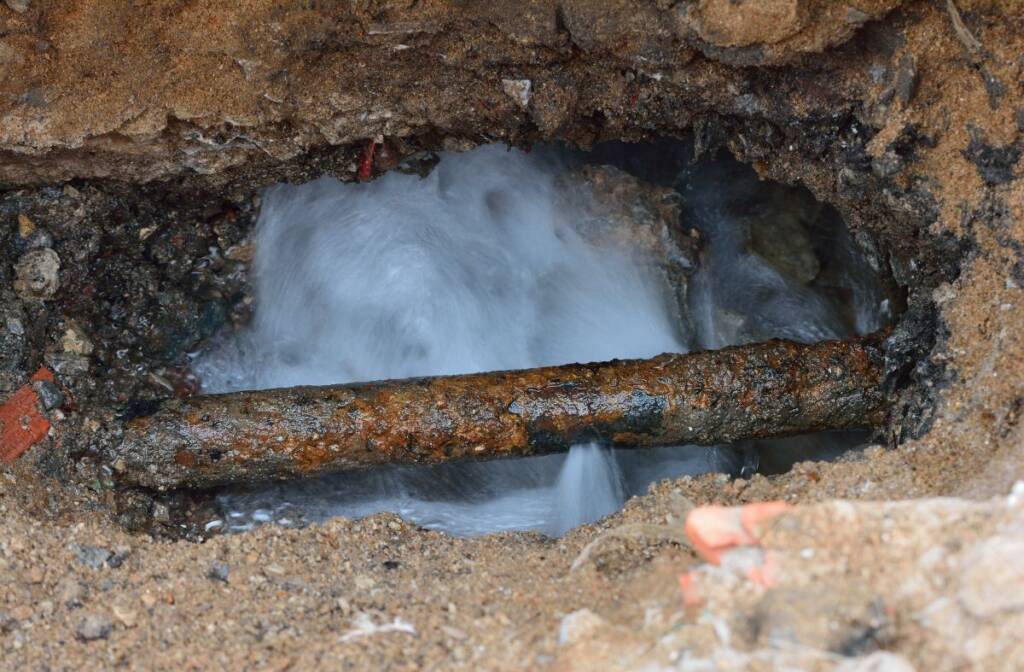
Water main breaks are among the most hazardous emergencies public works crews respond to, and they cluster in winter, when freezing temperatures and ice make the work harder and more dangerous.
240,000
Water main breaks per year
$2.6B
Annual repair & maintenance cost
$309B
Investment gap as of 2024
A separate Utah State University study of 802 utilities found the break rate has actually improved, 11.1 breaks per 100 miles, down from 14.0 in 2018, but that roughly 20% of mains are past their useful life, representing about $452 billion in deferred replacement.
The safety exposure is the trench
Moving water under high pressure destabilizes soil, and soil that has been saturated and scoured can collapse without warning. Trench safety is the paramount concern on every water main response. Work zone protection, appropriate PPE, and adequate lighting for night and low-visibility conditions are equally critical.
Many public works departments maintain a dedicated emergency response trailer stocked with work zone safety equipment, spare parts, PPE, generators, lighting, and space heaters, so crews are not improvising at 2 a.m. in freezing conditions.
What causes breaks
- Aging and corroded piping: cast iron fails at roughly ten times the rate of PVC
- Extreme cold causing freezing and expansion
- Soil instability from repeated freeze-thaw cycles
- Pressure fluctuations and surges
- Construction damage from third-party excavation
- Improper original installation
- Tree root intrusion
Prevention: monitoring, mapping, and prediction
Smart monitoring sensors track pressure and flow changes and detect acoustic signatures that indicate leaks before they become breaks.
GIS mapping may be the highest-value investment for small and mid-sized systems. Manhole covers, gate valves, and flow directions should be accurately mapped so critical valves can be located and operated quickly during an emergency
The difference between isolating a break in ten minutes and ninety minutes is often the difference between a repair and a claim.
AI-assisted prediction tools analyze pipe age, material, flow, and pressure history to forecast which segments are most likely to fail, allowing capital replacement dollars to be prioritized by risk rather than by complaint volume. Accurate records underpin all of it – a prediction model is only as good as the asset data behind it.
Timing and contractual risk transfer
Late spring and early fall generally offer the most stable ground conditions and lower demand for planned line work. Coordinating replacements with road resurfacing projects reduces cost and disruption.
When contractors or neighboring communities are involved, define risk transfer clearly and in writing before work begins:
- Document the roles and responsibilities of every party so accountability is unambiguous if a break occurs
- Have legal counsel review project-specific contracts
- Obtain and verify certificates of insurance and confirm they remain current
- Secure hold harmless provisions and additional insured status
Aging infrastructure, severe weather, and environmental stress cannot be fully controlled. Routine assessment, monitoring technology, accurate mapping, tested emergency procedures, and disciplined contractual risk transfer substantially reduce both the likelihood and the consequences of failure.
Guardrail Safety and Municipal Liability
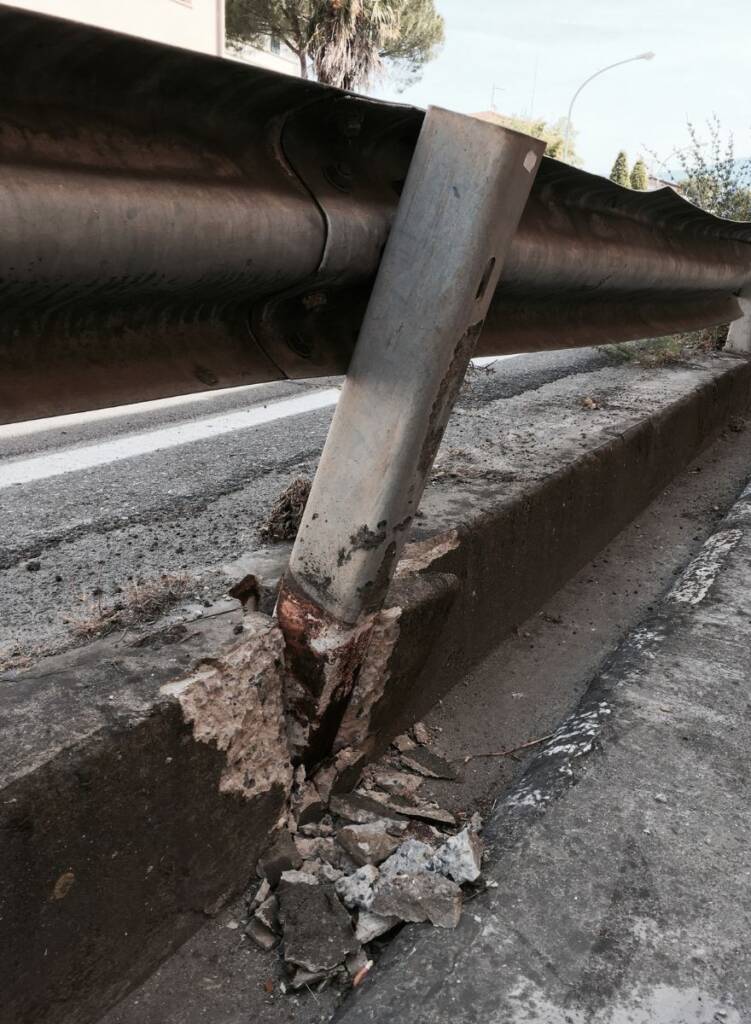
How often have you driven past a damaged guardrail? On any lengthy trip, probably several. Each one represents a documented-or-undocumented hazard on someone’s road system and a potential claim against whoever owns that road.
Start with these questions
- How often are your roads and bridges inspected?
- Do you have a written, scheduled inspection program? Routine inspections at least quarterly, with a more formal annual review?
- When staff identify damage, are work orders issued promptly?
- Are follow-up procedures performed consistently to confirm repairs were actually completed?
- Do your contracts with guardrail contractors require them to communicate deficiencies they observe, and obligate them to work with you on repairs?
If any answer is uncertain, that is where your exposure sits.
What the data actually shows
A frequently cited Transportation Research Board finding is that 50 to 60% of guardrail crashes involve an injury or fatality. That number is real, but it comes from a 1994 study, and quoting it alone is misleading. The same research found it applies to police-reported crashes, while roughly 90% of guardrail impacts are unreported drive-aways. Across all impacts, only about 6% involve any injury or fatality, and for properly installed and maintained guardrail struck under design conditions, only 2 to 3% do.
Guardrail that is correctly installed and properly maintained works. Guardrail that isn’t, doesn’t. That is precisely why your inspection and repair program is the controlling variable.
For current scale, IIHS 2024 data reports 785 deaths in crashes involving traffic barriers and 101 deaths in crashes involving guardrail ends — together about 11% of all 7,979 fixed-object crash deaths that year. Guardrails protect occupants from trees, utility poles, and steep slopes, but they are not themselves forgiving objects to strike.
Why terminals and mismatched components matter
Older blunt-end and turned-down terminals are designs FHWA identifies as obsolete and slated for upgrade on the National Highway System. They were never designed for modern vehicles at modern speeds, and in a collision they can cause a vehicle to vault or become impaled.
A 2015 FHWA/AASHTO joint task force analysis of 1,231 crashes found that the extruding W-beam terminals evaluated, from multiple manufacturers, all meeting the (then-current) NCHRP 350 standard, showed performance limitations in side impacts, head-on and shallow-angle corner impacts, and high-energy impacts. Improper grading and non-conforming placement degraded performance further.
Common causes of system failure
- Defective or obsolete design
- Improper installation, including inadequate grading at terminals
- Delayed repairs following a strike
- “Frankensteined” guardrail assembled from mismatched components, a maintenance shortcut that voids the crash-tested performance of the entire system.
Current guardrail systems
| System | Description | Typical application |
|---|---|---|
| Thrie-beam | Three corrugations vs. W-beam’s two; stiffer and stronger | Bridges, steep embankments, high-speed/high-risk locations |
| Midwest Guardrail System (MGS) | 31-inch W-beam, raised from the older 27¾-inch standard height | Widely accepted general standard |
| Cable barrier | Flexible; dissipates energy through deflection | Medians: lower cost, lets snow and debris pass |
| Concrete (New Jersey) barrier | Rigid; minimal deflection | Where deflection space is limited; cross-median prevention |
| Box beam | Steel tube weak-post system; box separates from post on impact | Scenic or lower-speed areas where appearance matters |
Selection depends on roadway speed, traffic volume, geometry, and available deflection space. Galvanized components extend service life.
Where liability attaches
Even well-chosen systems will not protect a municipality that cannot demonstrate a functioning inspection, maintenance, and repair process. Liability rarely turns on the hardware. It turns on notice – what the entity knew about a defect, and what it did next.
- Include guardrails explicitly in all road and bridge inspection programs. If your inspection form has no guardrail field, your inspectors are not inspecting guardrails.
- Document damage and report it to Public Works promptly, with date, location, photographs, and reference number.
- Have counsel review all guardrail contracts. The drafting party generally benefits from the language – if the contractor wrote it, read it twice.
- Evaluate insurance requirements with your broker or agent. Set appropriate limits and secure strong indemnification and hold-harmless provisions.
- Put written policies and procedures in place covering inspection, contractor notification, follow-up to confirm completion, and post-repair verification.
- Train staff regularly and reinforce expectations in safety meetings.
- Document all of it. The documentation is not administrative overhead, it is the evidence of your commitment to roadway safety, and it is what your defense will be built on.
Questions about your program?
Trident’s risk control team works with public entities every day on exactly these exposures: inspection program design, contractual risk transfer, and training.
This article is provided for informational purposes only and does not constitute legal advice or a determination of coverage. Laws vary by jurisdiction. Consult your legal counsel regarding requirements applicable to your organization.
If you find information here that no longer matches its source, we would appreciate hearing about it: Ask the Risk Control Manager